
Are There Palm Trees in Arizona, and How Do They Survive

- March 4, 2026
- By Arthur Gray
So, you’re wondering if palm trees can actually grow in Arizona? It’s a fair question, given all the cacti and desert landscapes. You might picture palm trees on a sunny beach, not in a dry, hot place like Arizona. But believe it or not, are there palm trees in arizona and palms can and do thrive there. This article is going to clear things up about the truth behind palm trees in Arizona, covering where they come from, which ones do best, and how to care for them. We’ll also touch on some interesting history and even look-alike trees.
Understanding Arizona’s Desert Palms
You might be surprised to learn that palm trees aren’t just for sandy beaches and tropical islands. Arizona, with its famously arid climate, is home to a variety of palms that have adapted surprisingly well. So, are there palm trees in Arizona? Yes, and it’s a bit of a desert paradox, seeing these iconic symbols of warmer, wetter places thriving amidst cacti and rugged landscapes. These desert-adapted palms bring a touch of the tropics to an otherwise. It’s a bit of a desert paradox, seeing these iconic symbols of warmer, wetter places thriving amidst cacti and rugged landscapes. These desert-adapted palms bring a touch of the tropics to an otherwise starkly beautiful environment.
Palms Flourishing Amidst Cacti
Palm trees thrive in Arizona, introduced to many areas and common in urban/suburban settings like parks and yards. Their resilience and local microclimates allow them to flourish, with many belonging to the Arecaceae family (2,600 global species).
Arizona’s Diverse Desert Climates
Arizona hosts several distinct desert regions (Sonoran, Chihuahuan, Mojave), each with unique characteristics. Local conditions like elevation and water access create pockets where different palms flourish, explaining why certain palms do better in one spot than another.
Here’s a quick look at the main desert types:
- Sonoran Desert: Known for its iconic saguaro cacti and relatively mild winters. This is where most introduced palms thrive.
- Chihuahuan Desert: Generally higher in elevation and can experience colder temperatures than the Sonoran Desert.
- Mojave Desert: Famous for Joshua trees, this desert is typically hotter and drier.
The Allure of Tropical Charm in Arid Landscapes
Palm trees offer a visual escape in Arizona’s desert landscape, introducing lushness and evoking vacation feelings. This tropical flair transforms yards into personal oases, making them a popular choice for a unique aesthetic.
The striking visual contrast between a tall palm and rugged desert terrain highlights nature’s resilience and the human drive to create beauty in unexpected places. This exotic-native blend captivates in Arizona’s palm-filled landscapes.
Surprisingly, these tropical plants thrive in this dry climate, raising questions about their history and arrival in the state.
The History and Origins of Palms in Arizona
Palms Flourishing Amidst Cacti
While palms seem native to Arizona’s sunny, desert vibe, most were actually introduced by people from tropical regions like Mexico, Southern California, Florida, Africa, or the Middle East seeking a piece of home. Over time, these planted trees became a familiar sight, notably in older neighborhoods and ASU’s Palm Walk, now integral to these landscapes.
Arizona’s Diverse Desert Climates
Arizona has varied desert environments: the Sonoran (where most live), the Chihuahuan in the southeast, and the Mojave in the northwest. Each has unique traits, and understanding these climates explains why certain palms thrive in specific locations, despite their general toughness.
The Allure of Tropical Charm in Arid Landscapes
Why plant palms in a desert? For a tropical feel, an escape from saguaros. Arcadia, Phoenix, planted date palms in the 1920s, inspired by farmer Roy Franklin’s love for Black Sphinx Date Palms. What began with 150 trees spread, with many original palms still standing. It shows how people shape environments for what they love, even in dry climates.
Introduced Species and Their Tropical Reminders
Most Arizona palm trees are not native, but were intentionally planted by settlers missing tropical regions. These introduced species from Mexico and Southern California adapted quickly, serving as mementos of home and adding an exotic touch to the arid landscape.
Historical Plantings and Neighborhood Transformations
These introduced palms have reshaped Arizona, notably in Phoenix’s Arcadia neighborhood. Farmer Roy Franklin planted Black Sphinx Date Palms in the 1920s. By the 1930s, the area was dotted with them, many still standing today, transforming the neighborhood’s character.
The Mystery of Potential Native Palms
A puzzle exists in western Arizona: about 40 Mexican Fan Palms in a Kofa National Wildlife Refuge canyon. Some believe they’re native, from a wetter past, while others suspect animal transport from California. Thus, Arizona’s native palm status is debated, adding intrigue to its desert flora.
Top Palm Varieties for Arizona Landscapes
Considering Arizona palm trees? Yes, are there palm trees in Arizona? They add a tropical feel to our desert. However, not all palms suit intense heat and limited water. Here are some top performers.
Desert-Adapted Palms for Arid Regions
For Arizona, palms need sun tolerance, drought resistance once established, and adaptability to alkaline soils. Many arid-region palms are naturally suited to these conditions, enhancing the landscape.
The Majestic Mexican Fan Palm
Common in Arizona, the Mexican Fan Palm (Washingtonia robusta) is a showstopper. It grows tall and slender, offering a classic “vacation” look. These fast-growing palms often become the state’s tallest and handle heat well. Give them ample space as they can grow quite large.
The Fruitful Date Palm
The Date Palm (Phoenix dactylifera) is beautiful and practical, producing edible dates in Arizona’s climate with proper care. It has a more robust trunk and wider spread than the Mexican Fan Palm.
The Striking Bismarck Palm
For a statement piece, the Bismarck Palm (Bismarckia nobilis) is ideal. It’s stunning, silvery-blue fronds spread wide for a dramatic effect. This sturdy palm reaches a good height, becoming drought-tolerant once established, and stands out against desert backdrops.
Here’s a quick look at some popular choices:
| Palm Variety | Scientific Name | Max Height (approx.) | Notable Features |
| Mexican Fan Palm | Washingtonia robusta | 100+ ft | Tall, slender, fast-growing, classic look |
| Date Palm | Phoenix dactylifera | 70-100 ft | Produces edible dates, robust trunk |
| Bismarck Palm | Bismarckia nobilis | 60 ft | Striking silvery-blue fronds, sturdy |
| California Fan Palm | Washingtonia filifera | 50-70 ft | Arizona’s only native palm, with a stocky trunk |
| Pindo (Jelly) Palm | Butia capitata | 35 ft | Compact, produces edible fruit, hardy |
Select a palm by considering space, microclimate, and desired look. Planning ensures it thrives.
Cultivating Palms in the Arizona Desert
So, you’ve decided to bring a little bit of the tropics to your Arizona home by planting a palm tree. That’s awesome! But, like anything in the desert, it’s not quite as simple as just sticking it in the ground and hoping for the best. You’ve got to give it a little extra thought to make sure it thrives. Are there palm trees in Arizona? Yes, and you’ve got to give it a little extra thought to make sure it thrives.
Choosing the Right Palm for Your Space
Choose palms suited for arid Arizona climates, considering your space and desired look. Some grow large, others stay compact.
- Consider your yard’s size: Measure the area where you plan to plant. Remember to account for mature growth, both in height and width.
- Think about sunlight: Most desert palms love the sun, but some can handle a bit of shade, especially when they’re young.
- Check your soil: Good drainage is super important. Palms don’t like having their roots sit in soggy soil, which can lead to problems.
Optimal Planting Times for Root Establishment
Planting palms from late spring to early summer (May-July) is ideal for survival. Warm soil (at least 65°F) encourages root growth, allowing the palm to establish itself before cooler weather. This planning ensures long-term health. For more desert Southwest planting advice, see this guide.
Essential Care for Desert Palms
Once planted, care is minimal if the right palm was chosen. Established desert palms are tough and used to dry conditions, but need some help when young.
- Watering: This is the big one. While they’re drought-tolerant, they still need water, especially during their first few years. Water deeply, extending out beyond the trunk, and let the top few inches of soil dry out between waterings. The exact amount and frequency depend on the palm type, your soil, and the weather.
- Fertilizing: Palms can benefit from a good palm fertilizer, especially one with micronutrients, to prevent deficiencies like manganese, which can cause yellowing leaves.
- Pruning: Generally, it’s best to let dead fronds and flower stalks fall off on their own. Avoid cutting green fronds unless necessary, as they provide energy for the tree.
In Arizona, palm care means adapting to the climate: choose the right species, plant at the right time, and provide consistent, moderate care. Once established, they’re resilient, transforming desert landscapes.
Addressing Common Palm Tree Concerns
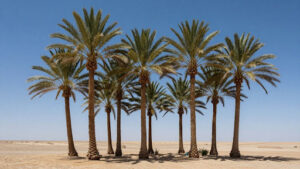
Even though many palms are tough, they can still run into issues, especially in a desert climate like Arizona. Are there palm trees in Arizona? It’s not always smooth sailing, and sometimes you’ll see signs that your palm isn’t too happy.
Water Requirements in Arid Climates
Water is crucial. Desert palms need a balance; too little stresses them, too much invites fungus or root rot.
- Established palms: Once they’ve been in the ground for a while, many desert-adapted palms are pretty good at handling dry spells. They might need a deep watering every few weeks during the hottest parts of summer, but less often when it’s cooler.
- Young palms: These guys are thirstier. They need more consistent moisture to get their roots settled. Think of it like a baby – they need more attention.
- Soil matters: Sandy soils drain fast, so they’ll need water more often than heavier clay soils. You can always check the soil moisture a few inches down before you water.
Potential Pests and Diseases
Palms aren’t immune to creepy crawlies or sickness. Sometimes, it’s just a matter of keeping an eye out.
- Scale insects: These little sap-suckers can show up and weaken the palm. They often look like small bumps on the leaves or stems.
- Palmetto weevils: These are more of a threat to stressed or damaged palms. Their grubs can do some serious damage inside the trunk.
- Fungal issues: Things like Fusarium wilt or trunk rot can happen, often linked to overwatering or improper pruning. Keeping your palm healthy with good care is the best defense against most problems.
Cold Tolerance and Freeze Damage
Arizona can get surprisingly cold, especially at night during winter. While many palms we plant are chosen for their heat tolerance, they can still be sensitive to frost.
- Young palms: These are generally more vulnerable to cold than mature ones.
- Damage signs: You might see browning or blackening of the fronds, especially the tips. In severe cases, the spear leaf (the one emerging from the top) can be affected.
- Protection: For palms that aren’t super cold-hardy, you might need to cover them during a hard freeze, especially if you live in an area that dips below 20°F (-6.7°C) for extended periods.
Addressing desert palm issues needs observation and understanding. Know what’s normal for your palm and the signs of trouble. Attention helps keep these beauties thriving.
Queen palms, for instance, can really struggle in Arizona’s low desert heat and alkaline soil, often showing signs of distress that make them high-maintenance plants in this environment. Queen palms struggle in Arizona’s low desert due to extreme heat, alkaline soil, and hard water, leading to common signs of distress. These conditions make them high-maintenance plants in this environment.
Unique Palm-Like Trees of Arizona’s Past
Fossilized Remains in Petrified National Forest
It might surprise you to learn that Arizona wasn’t always the arid landscape we know today. Millions of years ago, this region was a very different place, supporting a variety of plant life, including trees that looked a lot like palms. These ancient giants left behind incredible evidence of their existence, preserved in stone. So, are there palm trees in Arizona? Yes, in fossilized form. Petrified National Forest near Holbrook displays fossilized wood from prehistoric trees. These petrified remnants of ancient flora thrived when Arizona’s climate was wetter and cooler, offering a glimpse into the past with colorful stone ancestors of modern plants.
Ancient Flora from the Triassic Period
The trees that became petrified wood date to the Late Triassic, ~225 million years ago. These palm-like trees stood tall in a vastly different ecosystem, studied by scientists to understand Arizona’s ancient environment, unlike its current desert landscape.
Here’s a quick look at what we know:
- Time Period: Late Triassic (about 225 million years ago)
- Location of Fossils: Petrified National Forest, Northern Arizona
- Type of Flora: Palm-like trees, ancestors to modern conifers and cycads.
- Ancient Climate: Much wetter and more temperate than present-day Arizona.
These Arizona plant fossils offer a glimpse into Earth’s deep history, showing how landscapes change over time. It makes one wonder what other secrets lie beneath the desert sands.
Yes, Arizona’s deserts can support various palm trees, though not vast natural forests. Species like the Mexican Fan Palm and Date Palm thrive, often with human help and drought-tolerant selections. A potentially native palm in Palm Canyon adds intrigue. So, plant a palm, but choose wisely for your desert landscape.
Frequently Asked Questions
Can palm trees really grow in the Arizona desert?
Yes! Many palms thrive in Arizona’s hot, dry climate, adding tropical style to desert landscapes alongside cacti.
Were palm trees always in Arizona?
Palms likely weren’t native to Arizona; most were planted by people missing tropical aesthetics. However, a small group of Mexican Fan Palms in Palm Canyon might be ancient remnants from a past, different climate.
What are some popular palm trees for Arizona yards?
Favorites include the Mexican Fan Palm, fruit-producing Date Palm, and striking Bismarck Palm. These handle desert heat and dry air well.
When is the best time to plant a palm tree in Arizona?
Plant from late spring to early summer (May-July) when the soil is at least 65°F (18.3°C) for good root growth.
How much water do desert palm trees need?
Most palms need regular watering, especially when young. Water deeply, 4 feet from the trunk and 2 feet down. Water again when the top 3 inches of soil feel dry.
Can you eat the fruit from date palms grown in Arizona?
Yes, Arizona is great for edible Date Palms. Enjoy dates from your own trees or try date shakes at local farms.