
Huisache Tree vs Mesquite: Growth Rate and Mature Size
- January 2, 2026
- By Arthur Gray
When you’re looking at thorny trees for your landscape, two names that often pop up are Huisache and Mesquite. Both are tough, desert-loving plants, but they have their own quirks, especially when it comes to how fast they grow and how big they get. If you’re trying to decide which one might be a better fit for your yard or ranch, understanding their growth habits is pretty important. This article breaks down the differences between Huisache tree vs Mesquite, focusing on their growth rate and mature size, so you can make an informed choice.
An Introduction to Two Thorny Legumes
When you think about the arid landscapes of the American Southwest, a couple of thorny trees probably come to mind. Two of the most common are the huisache tree and mesquite. Both are legumes, meaning they belong to the pea family, and both have a reputation for being tough and resilient. But when you’re looking at them side-by-side, especially when considering how they grow and how big they get, there are some interesting differences. This article is all about digging into the details of the huisache tree vs mesquite, focusing on their growth rates and what you can expect when they reach their full size.
These trees aren’t just random desert plants; they’ve played a big role in the ecosystems they inhabit for a long time. They’re known for their deep roots, which help them survive in dry conditions, and their ability to provide food and shelter for wildlife. Understanding the huisache tree vs mesquite is key if you’re trying to figure out which one might be right for a particular spot, or just if you’re curious about the plants that define so many of our dryland environments.
Here’s a quick look at what makes them stand out:
- Huisache Tree: Often seen as a shrub or a small tree, known for its bright yellow, fragrant flowers.
- Mesquite: This is a whole genus with several species, typically growing into larger trees, also with yellow flowers, but often a bit more spread out.
We’ll be comparing the huisache tree vs mesquite on a few key points:
- Growth Speed: How fast do they shoot up?
- Mature Size: How tall and wide do they get?
- Environmental Needs: What kind of soil and climate do they prefer?
It’s easy to lump all thorny desert plants together, but the huisache tree vs mesquite comparison reveals some distinct personalities. Let’s get into it.
What Is a Huisache Tree? Overview, Origin & Characteristics
Alright, let’s talk about the Huisache tree. If you’ve spent any time in the southwestern U.S. or parts of Mexico, you’ve probably seen it. It’s a thorny legume, and honestly, it can be a bit of a character in the landscape. Native to the Americas, this tree has spread its wings, or rather, its branches, quite a bit. It’s known for being pretty tough and adaptable, which is why you find it in a range of environments.
One of the first things you’ll notice about Huisache is its appearance. It’s not exactly a towering giant, usually staying in the smaller tree or large shrub category. The leaves are feathery, almost fern-like, and the whole plant is covered in thorns. Seriously, watch out for those! But despite the thorns, it has this charm, especially when it blooms.
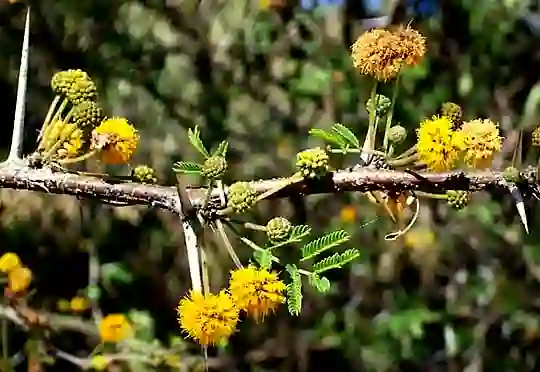
Speaking of blooms, Huisache puts on a show. In late winter or early spring, it explodes with these bright, fragrant, yellow, puffball-like flowers. It’s a real sight and a welcome splash of color after a drab winter. The scent is pretty sweet, too, hence one of its common names, ‘sweet acacia’.
Here’s a quick rundown of what makes a Huisache a Huisache:
- Appearance: Thorny shrub or small tree with feathery leaves.
- Flowers: Bright yellow, fragrant, ball-shaped clusters that appear in late winter/early spring.
- Origin: Native to the Americas, particularly common in arid and semi-arid regions.
- Adaptability: Can grow in a variety of soils and conditions, though it prefers well-drained sites.
Huisache is a plant that really thrives in tough conditions. It’s not picky about soil and can handle drought pretty well once it’s established. This resilience is a big part of why it’s so widespread.
It’s worth noting that Huisache can sometimes be mistaken for other thorny plants, like mesquite, but there are differences. Its growth habit and flowering are pretty distinctive. If you’re looking at a plant that’s covered in those fluffy yellow blooms in the cooler months, chances are you’re looking at a Huisache. It’s a plant that’s deeply connected to the ecosystems it inhabits, providing habitat and food for various wildlife. You can find more information about its spread and characteristics on pages discussing invasive woody plants.
So, that’s the Huisache in a nutshell. A tough, thorny, but beautiful tree that adds a unique touch to the landscape, especially when those yellow flowers pop.
Understanding Mesquite Trees: Species and General Traits
Mesquite trees, belonging to the Prosopis genus, are a common sight in arid and semi-arid regions. You’ll find them scattered across the southwestern U.S., Mexico, and even parts of South America and Africa. The two main types you’ll likely encounter in the U.S. are Honey Mesquite (Prosopis glandulosa) and Velvet Mesquite (Prosopis velutina).
These trees are known for their thorny nature and their ability to adapt to tough conditions. They can show up in a few different ways:
- Single-stemmed trees: These can grow to be about 20 to 40 feet tall, often with branches that have a bit of a droop or a twist to them.
- Multi-stemmed shrubs: These are usually shorter, maybe 10 to 15 feet high, and have a bushier, more upright form.
- Low-growing, spreading shrubs: These tend to hug the ground, especially in deep sandy soils.
The growth form often depends on the environment and what the plant has been through. For instance, if a mesquite plant gets damaged – maybe by a freeze, fire, or even just heavy browsing by animals – it can sprout new growth from its underground stem, leading to that multi-stemmed look. It’s pretty wild how resilient they are.
Their leaves are compound, meaning each leaf is made up of smaller leaflets, and they’re deciduous, so they drop their leaves. The flowers are usually in long, fuzzy-looking clusters, and they develop into pods. These pods are flat and can be quite long, hanging down in bunches. You might notice thorns on the branches, too; they can be a couple of inches long and usually appear one at a time on younger stems.
Mesquite trees have a remarkable root system that’s key to their survival in dry climates. The roots can grow incredibly deep, sometimes reaching down 40 feet or more if there’s water available underground. This allows them to tap into moisture sources that other plants can’t reach, making them true survivors of the arid landscape.
When it comes to their yearly cycle, mesquite trees typically start leafing out and growing new twigs in the spring, usually around April or May. This initial burst of growth is pretty quick, often finishing up in about six weeks. After that, the stems start to thicken. By mid-June, when the summer drought usually kicks in, their main vegetative growth slows down. However, if they get enough rain later in the season, they might put out new leaves. Flowering happens not long after the leaves appear, and while they produce a lot of blooms, only a fraction of them turn into pods. The number of pods a single tree produces can vary a lot from year to year.
Comparing Growth Rates: Huisache Tree vs Mesquite
When you’re trying to figure out which of these thorny beauties to plant, their growth speed is a big deal. It’s not always a straightforward comparison, though, because a lot of factors can play into how fast they shoot up.
Generally speaking, both Huisache and Mesquite are considered relatively fast growers, especially when they’re young and have good conditions. They’re adapted to tough environments, so they tend to get going pretty quickly to establish themselves.
Here’s a quick look at what influences their growth:
- Water Availability: This is a huge one. Both trees can handle dry spells, but consistent moisture, especially during their early years, will really speed things up. Mesquite, with its impressive root system, can tap into deep water sources, which helps it keep growing even when the surface is dry.
- Soil Quality: While they aren’t picky, they’ll grow faster in decent soil. Richer soil with good drainage is always a plus.
- Sunlight: Full sun is what these guys love. More sun generally means more energy for growth.
- Competition: If they’re up against a lot of other plants for resources, their growth might slow down a bit.
It’s tough to give exact numbers because a Mesquite in a prime spot might outgrow a Huisache in a less-than-ideal location, and vice versa. However, both are known for putting on a decent amount of height and spreading each year once they get established. You’re usually looking at a tree that can add a foot or more in height annually under good conditions.
Keep in mind that ‘fast-growing’ for these desert natives is different from, say, a poplar or a willow. They’re built for endurance, not just speed. Their growth is often about survival and reaching resources, which can sometimes mean a slower, steadier pace rather than a rapid explosion.
Typical Growth Patterns of Huisache Trees
Huisache trees, while related to mesquite, have their own distinct way of growing. They’re not exactly fast growers, especially when they’re young. Think of them as taking their sweet time to establish themselves.
Their growth pattern can be a bit variable, but generally, you’ll see them start as a shrubby form. It takes a while for them to develop that single, more tree-like trunk. This initial slow start is pretty common for many native Texas trees that are adapted to tough conditions.
Here’s a general idea of what to expect:
- Early Years: Expect a slower pace. The plant focuses on building a strong root system and getting established in its environment. It might look more like a dense bush than a tree.
- Maturing Phase: Once established, the Huisache will begin to show more vertical growth. It starts to form a more defined trunk, though it can often remain multi-stemmed.
- Branching: The branches tend to be somewhat irregular and can spread out. They often have that characteristic thorny appearance.
It’s interesting how they respond to their surroundings. If conditions are really dry or the soil isn’t great, they’ll grow even slower. But give them decent moisture and soil, and they’ll pick up the pace a bit, though never super fast.
Huisache growth is often described as deliberate. It prioritizes resilience and deep establishment over rapid vertical expansion, especially in its formative years. This strategy allows it to thrive in arid and semi-arid climates where water can be scarce.
Typical Growth Patterns of Mesquite Trees
Mesquite trees, particularly species like the Honey Mesquite, have a growth pattern that’s pretty adaptable, but generally, they’re not exactly speed demons.
Their growth is heavily influenced by water availability and soil conditions. In drier, more challenging environments, you’ll see mesquite trees grow quite slowly, often adding less than a foot per year. This slow and steady approach helps them conserve resources. In areas with more consistent moisture, like along watercourses or floodplains, they can grow a bit faster and reach larger sizes because their extensive root systems can tap into a reliable water source.
Mesquite seedlings often start as single-stemmed plants. However, if the top growth gets damaged – maybe by an animal nibbling it, a harsh frost, or even human intervention like mowing or herbicide – the plant has a neat trick: dormant buds underground can kick in. This often leads to a multi-stemmed, bushier growth form. So, a plant that looks like a small shrub might actually be decades old, just with its top growth repeatedly set back.
Here’s a general idea of their annual cycle:
- Spring (April-May): This is when the mesquite gets busy. Leaves emerge, and twigs start to lengthen. This initial burst of growth usually wraps up within about six weeks.
- Early Summer (June): After the initial growth spurt, the tree focuses on thickening its stems. However, as summer heat and drought set in, vegetative growth slows down considerably.
- Late Summer/Fall: If there’s enough rain, mesquite might put out a second flush of leaves, but this isn’t guaranteed.
It’s interesting how mesquite can vary so much. You might see a tall, single-trunked tree one day, and then a low, sprawling bush the next, all from the same species. This flexibility is key to their survival across diverse landscapes.
Mesquite’s root system is a marvel of adaptation. While often thought of as deep-rooted phreatophytes in very arid regions, drawing water from depths of 15 feet or more, in areas with more rainfall, they also develop extensive shallow lateral roots. These can spread out significantly, sometimes up to 50 feet from the main trunk, allowing them to capture moisture from a wide area of the soil surface. This dual strategy of deep taproots and wide-spreading shallow roots makes them incredibly resilient.
When you’re looking at mesquite, remember that a small, slow-growing plant might have a very established root system, especially if it’s been around for a while. This is why understanding their growth patterns is so important when considering them for landscaping or managing them in natural areas.
Mature Size of Huisache Trees: Height and Spread
When you see a Huisache tree, you’re usually looking at something that’s not going to take over your entire yard, but it’s definitely a presence. These trees typically reach a mature height of about 20 to 40 feet. That’s a good size for many landscapes, offering shade without being overwhelming. The spread is often similar, sometimes a bit wider, creating a nice, rounded canopy.
It’s interesting how they grow, too. You’ll often find them with a single, sturdy trunk, but sometimes they branch out lower down, giving them a more shrub-like appearance, especially if they’ve had to deal with harsh conditions or damage. This can make their spread seem a bit more variable.
Here’s a general idea of what to expect:
- Height: 20-40 feet (6-12 meters)
- Spread: 20-30 feet (6-9 meters), sometimes wider depending on the form.
- Trunk: Can be single or multi-stemmed.
The mature size can really depend on where it’s growing. If it has access to plenty of water and good soil, it’s more likely to reach the upper end of its height range and develop a fuller crown. In tougher spots, it might stay a bit smaller and more compact.
So, while they aren’t giants, Huisache trees offer a substantial, attractive form that fits well into many Texas landscapes.
Mature Size of Mesquite Trees: Height and Spread
Mesquite trees, particularly the common honey mesquite (Prosopis glandulosa), can really vary in size. It’s not a one-size-fits-all situation.
Generally, you’ll see mesquite trees reach heights of about 20 to 40 feet, but some can get a bit taller, especially if they’re in a good spot with plenty of water. They often have a somewhat crooked or drooping branch structure, giving them a distinctive look. The spread can be just as wide as their height, sometimes even more, creating a nice, shady canopy.
Here’s a quick rundown of what you might expect:
- Typical Height: 20-40 feet (6-12 meters)
- Typical Spread: 20-40 feet (6-12 meters)
- Maximum Recorded Height: Some sources mention taproots reaching extraordinary depths, and while this relates to their ability to survive, the above-ground tree size is usually within the 40-foot range.
It’s interesting how their form changes. You might find a single-trunked tree, or sometimes a multi-stemmed shrubby type that stays much shorter, maybe only 10 to 15 feet tall. This often happens if the main stem gets damaged, maybe by frost or an animal nibbling it when it was young. The plant then sends up new shoots from its base.
The size a mesquite tree ultimately reaches is heavily influenced by its environment. While they are tough and can survive in tough conditions, optimal growth happens where there’s consistent moisture, allowing their impressive root systems to really do their job. In drier areas, they might stay smaller or adopt a more shrub-like form.
So, while you can plan for a decent-sized tree, remember that factors like soil, water availability, and even past damage can play a big role in how big your mesquite actually gets.
How Climate and Soil Affect Growth in Huisache vs Mesquite
So, you’re wondering how where you plant these thorny trees actually matters? It turns out, a lot! Both huisache and mesquite are tough cookies, built for dry, tough conditions, but they still have their preferences.
Climate plays a huge role. Think about rainfall. Mesquite, especially species like honey mesquite, can handle seriously arid spots. They’ve got these amazing root systems that can tap into deep underground water sources when things get really dry. Huisache, while also drought-tolerant, tends to do a bit better with a little more consistent moisture, though it’s still a champion survivor in dry spells.
Temperature is another biggie. Both trees are heat lovers, thriving in the warm climates of the southwestern US and beyond. Extreme cold, however, can be a problem for both, potentially stunting growth or even causing damage, especially for younger trees.
Now, let’s talk soil. These guys aren’t picky eaters, generally. They can grow in a wide range of soil types, from sandy washes to heavier clay soils. However, mesquite often shows a preference for medium to fine-textured soils, and it can really thrive in areas where it can spread out its roots.
Here’s a quick rundown:
- Rainfall: Mesquite generally tolerates drier conditions better than huisache, thanks to its deep taproot.
- Temperature: Both love heat, but prolonged, extreme cold can be a setback.
- Soil Texture: While adaptable, mesquite often prefers medium to fine soils, and both can handle a variety of conditions.
- Soil Fertility: Mesquite, being a nitrogen-fixer, can actually improve soil fertility over time, which benefits other plants around it.
It’s interesting how these trees, often seen as just tough desert plants, have such specific needs and responses to their environment. Understanding these nuances can really help you pick the right spot for them to truly flourish, or at least survive and do their thing.
So, if you’ve got really dry, hot conditions, mesquite might have a slight edge. If you have slightly more forgiving conditions, huisache can also put on a good show. It’s all about matching the tree to its happy place!
Root Systems Compared: Deep Roots and Water Access
When we talk about how trees like Huisache and Mesquite survive in tough, dry places, their roots are a huge part of the story. Both are known for having pretty impressive root systems, but there are some differences in how they go about getting water.
Mesquite trees are famous for their deep roots. We’re talking seriously deep – sometimes reaching down 40 feet or even more if there’s water available underground. This allows them to tap into water sources that shallower-rooted plants just can’t reach. It’s like having their own private well, which is a big advantage when the surface is bone dry. This deep-reaching ability is a major reason mesquite can thrive in arid conditions.
Huisache trees also have strong root systems, but they tend to be a bit more spread out. While they can send a taproot down, they often rely more on extensive lateral roots that spread out wide near the surface. This helps them capture any rain that falls, even if it doesn’t soak in very deeply. Think of it as casting a wide net to catch water.
Here’s a quick look at what we generally see:
- Mesquite: Known for a deep taproot, often reaching significant depths to find groundwater. Also develops lateral roots, especially in areas with less rainfall.
- Huisache: Typically has a more widespread lateral root system, good for catching surface moisture. It can also develop a taproot, but often not as pronounced as mesquite’s.
The way these trees manage water through their roots is a key survival strategy. It’s not just about how deep they go, but also how wide they spread to make the most of available moisture, whether it’s deep underground or just a light shower on the surface.
So, while both are masters of water acquisition, mesquite often gets the spotlight for its extreme depth, while Huisache is a pro at soaking up what’s closer to the surface with its broader network.
Landscape Uses: Choosing Between Huisache and Mesquite
So, you’re trying to figure out which of these thorny beauties, Huisache or Mesquite, is the right fit for your yard or property. It really comes down to what you want them to do.
Mesquite, especially honey mesquite, has a long history of being seen as a nuisance, but it’s actually got a lot going for it when managed right. Think of it as a resource, not just a weed. It can provide shade for livestock, offer homes for wildlife, and even improve soil. Plus, its pods were a staple food for Native Americans, and the wood can be used for products. If you’re aiming for a more natural, savanna-like look or want to support local ecosystems, mesquite might be your pick.
On the other hand, Huisache is often admired for its bright yellow, fragrant flowers, making it a popular choice for ornamental landscaping. It’s a bit more of a showstopper when it blooms.
Here’s a quick rundown to help you decide:
- For Wildlife Habitat & Soil Improvement: Mesquite often wins. Its dense growth can shelter birds and deer, and its nitrogen-fixing ability helps the soil.
- For Ornamental Appeal & Fragrance: Huisache takes the prize, especially in spring when it’s covered in those cheerful yellow blooms.
- For Drought Tolerance & Low Maintenance: Both are tough cookies, but mesquite’s deep roots give it an edge in extremely dry conditions.
- For Wood Products: Mesquite wood is known for its durability and is used for furniture and smoking chips.
When deciding, consider the mature size we talked about earlier. A giant mesquite might be too much for a small garden, while a well-placed Huisache could be just the ticket. It’s not just about planting a tree; it’s about understanding its role in your landscape and the wider environment.
Key Differences in Growth Rate and Mature Size Between Huisache Tree vs Mesquite
When you’re trying to figure out which of these thorny legumes to plant, understanding how fast they grow and how big they get is pretty important. Both Huisache and Mesquite are tough desert dwellers, but they have their own quirks.
Mesquite trees generally show a more variable growth rate and mature size compared to Huisache. This is largely due to the many different species and the wide range of environments they can adapt to. While a Huisache might stick to a more predictable pattern, Mesquite can be a shrub one year and a decent-sized tree the next, depending on water and soil.
Here’s a quick rundown:
- Growth Speed: Huisache tends to have a moderate, steady growth rate, especially when it’s young and has decent conditions. Mesquite, on the other hand, can be a bit of a surprise. It might grow slowly for a while, then suddenly put on a spurt if conditions are just right, particularly if it can tap into deeper water sources. Some sources mention mesquite seedlings growing roots faster than shoots, which is a survival tactic.
- Mature Height: Huisache trees typically reach a mature height of around 20-30 feet, with a similar spread, creating a nice, rounded canopy. Mesquite, however, is more of a wildcard. While some species might top out around 20-25 feet, others, especially those with access to consistent water, can grow taller, sometimes reaching up to 40 feet. You’ll also find mesquite that stays as a low shrub, often less than 10 feet tall.
- Mature Spread: Similar to height, the spread of Mesquite can vary a lot. A tree form might spread 20-30 feet, but some of the shrubby forms can spread wider than they are tall.
It’s interesting how these trees handle water. Mesquite is famous for its deep roots, sometimes reaching incredible depths to find moisture. This allows it to survive in very dry conditions, but it also means its growth can be inconsistent if that deep water isn’t always available. Huisache also has a good root system, but it’s generally not as extreme as the deepest mesquite roots.
The adaptability of both species is remarkable. They’ve evolved to thrive in tough conditions, but this also means their final size and how quickly they get there can be influenced by more than just age. Soil type, rainfall patterns, and even competition from other plants play a big role in how a Huisache or Mesquite tree ultimately develops. Understanding these factors can help you predict their behavior in your own landscape.
So, if you’re looking for something predictable, Huisache might be your pick. If you’re okay with a bit of variability and want a plant that can really make the most of whatever water it finds, Mesquite offers that potential. You can find more information on how different environmental factors affect tree seedlings in savanna research.
When comparing Huisache trees and Mesquite trees, you’ll notice they grow at different speeds and reach different sizes when fully grown. Understanding these growth rates and mature size differences is key to any landscaping project. Want to know more about how these trees compare and which might be best for your yard? Visit our website for a detailed comparison and expert advice!
Frequently Asked Questions
How fast do Huisache and Mesquite trees grow?
Mesquite trees tend to grow a bit faster, especially when they’re young and have plenty of water. They can shoot up several feet in a good year. Huisache trees are a bit more laid-back with their growth, often taking their time to reach their full size.
What’s the biggest size a Huisache tree can get?
Huisache trees usually don’t get super tall. They often stay around 20 to 30 feet high, sometimes a bit taller. Their branches can spread out wide, making them look quite full.
How large do Mesquite trees typically grow?
Mesquite trees can vary a lot in size. Some stay as small shrubs, while others can grow into trees reaching up to 25 or even 40 feet tall. The biggest ones are usually found where they have access to lots of water.
Do Huisache and Mesquite trees have deep roots?
Yes, both are known for their deep root systems! Mesquite trees are famous for sending roots way down to find water, sometimes hundreds of feet deep. Huisache trees also have strong roots that help them survive dry spells.
Can the environment affect how these trees grow?
Absolutely! Just like any plant, Huisache and Mesquite trees grow best when they have the right conditions. Good soil and enough water help them grow faster and bigger. Too much dryness or poor soil can slow them down.
Do thorns play a role in their growth?
Thorns are more of a defense mechanism than something that directly impacts growth rate or size. Both trees have thorns to protect themselves from animals that might want to eat them.
Which tree is generally considered to grow larger?
While both can become substantial trees, Mesquite trees, particularly certain species, have the potential to grow taller and have a more massive trunk than most Huisache trees.
Are Huisache and Mesquite trees related?
Yes, they are related! Both Huisache and Mesquite trees belong to the legume family, which means they are cousins in the plant world. They also share the characteristic of having thorns and being well-suited to dry climates.